Important

The WHAT'S NEW! page contains the latest medical updates. If you're wondering how I'm going as far as health is concerned, this is the place to start. Latest: Wed 27 Nov 2013. 7.20AM

Monday, November 8, 2010

An Intriguing Tale: my early love life [Part 2]


[continued from Part 1]


We stopped walking back to her seat when blackness fell and then the most extraordinary knee-jellifying thing occurred; something I will never forget. Robyn N. turned her face up to mine in the pitch blackness and kissed me full on the lips – a kiss that lasted oh, about a third of a second, I would guess, but for me, time kinda stopped still, you know? And her lips were so SOFT and, well, lippy… and in all honesty I had not the faintest idea it was coming, nor how she had managed to be such a good shot in the dark of the night. I mean, this was exactly square on; a docking as neat as what happens between the space shuttle and the space station. [Hmmmm, that metaphor needs a LOT of work, but I’m getting a little carried away here by the excitement of the memory….I’ll just move on, I think.] Had I ever had the courage to attempt such a kiss, I would probably have got her on the nose, or an eyebrow; not that I ever thought of it, even in the pitch darkness.

It was one of the nicest things that ever happened to me. I’m not exaggerating about the knee-knocking effect. I had had my first kiss and it was magic. No need to even wonder where the noses go – it just happened as if decreed by a gentle and benevolent fate. So I smiled, said thank you for the dance, and returned to the alcoves where the males congregated. The MC had hardly opened his mouth to announce the next dance when I was right there in front of her… will you have this dance with me? I could even have taken advantage of my childhood dance floor skill of ‘surfing’ across the floor to her seat, but abandoned the idea as it was just a bit unsophisticated. A teeny bit too country. In other ways it would have looked good, though. I’d have been impressed if I were the girl and a bloke took a little run and then slid like a surfer on a rather flat wave and cruised gently to a stop exactly in front of me, without having to apply any brakes.

I could have done that. But I was going way too well to take the risk of a social faux pas. She was a town girl after all and hick status wasn’t cool.

We danced the rest of the night away; the Pride of Erin, the Maxina, the Evening Threestep, forgoing the Progressive Barn Dance lest we be parted even for that short time. I think we even sat together during the Progressive and held hands, which was rather daring in public view. Besides, I didn’t want to take the risk that she might be with a tall, dark and handsome stranger if the lights went out in the Progressive, and she decided to do another test run or two in the lip-docking accuracy stakes. Some things are well worth holding hands for, even on a tropical sweaty October night.

For a brief moment I forgot my Lorraine, my flaxen-haired Calliope-Targinnie girl with the pink swishy dress. Oh all right, I’ll admit it then - I’m lying through my teeth – I forgot her for the entire night, and the rest of the weekend as well, fantasising about Robyn N’s darkly dreamy smile and soft lips and a hug or two, unfettered by a mother with an eternally vigilant eye plus the other one as backup, as would have happened in Calliope. Lorraine's mother, I mean.

The following Monday, when my class was in one room having a Physics lesson, I could see Robyn through the glass door between rooms doing her Bookkeeping class. We waved to each other and smiled. The moment the bell rang to end the class, Merle Mounter from Robyn’s class opened the door between rooms and slipped into my hand a small home-made envelope with SWALK within a blood-red heart neatly written on the back.

‘It’s from Rob,’ she whispered to me. Merle Mounter was absolutely smashing in appearance from top to toe [if any boy ever got to look as far down as her toe, that is, because of the distractions on the way down. I doubt it; in fact, I can't personally vouch for any of her toes myself, come to think of it.] She effortlessly attracted Grade 12 boys who shaved daily because they had to, unlike me. I shaved daily only because of the well-ingrained myth that the more you shaved the faster and darker the replacement hair grew, and with facial hair like the fuzz off peaches, I needed mine to grow as fast as possible.

I knew Merle had no romantic interest in me, but she was just making sure I didn’t misunderstand where the envelope had come from. With someone as alluring as she was, hope sometimes outshone reality in mid-teen boys. But not me. [But not I, then – see how a relentless grounding in formal grammar cramps your style? That 'not I' looks ridiculous, but after going for idiom over formality in the previous paragraph I have to say something. Grammar begone. You’re henceforth sacked. Fired. Past your use-by date.] 


No, I was sufficiently captivated by Robyn N. after that first glorious kiss. I didn’t need the undoubted charms of Merle Mounter. Nor, I confess until I was writing this, did I appreciate the improper pun in her surname, which luckily for her seemed to have escaped everyone when we were at high school. Or maybe it was just naïve little me - but I never heard anyone joke about it.

In private, I opened the envelope she’d delivered to me and it contained five cardboard pieces of the slogan peeled off a plastic Capilano honey dispenser label - the ones with the nozzle - and which had been cut up with great care:

ME! | YOUR | I’M | SQUEEZE | HONEY.

Being pretty skilled in English and all its subtleties, it did not take me long to work out the romantic message the words contained, nor the innovative mode of delivery - a reasonably easy jigsaw puzzle with helpful punctuation if you got really stuck. I could never look at a container of honey the same way again. I imagine a Japanese Heian courtier lady in the eleventh century would have been equally as charmed as I was had she received a poem from her lover in beautiful calligraphy, on fine notepaper perfumed perfectly for the occasion. Robyn’s mode was every bit as good from my point of view. She definitely had a way of getting the message across, and it surely delighted me. That’s townie sophistication for you. I’m not sure Lorraine would have thought of something like that. It wasn't a Targinnie mode of expression.

Speaking of whom, I continued to go to Calliope dances when they were on, and Lorraine and I carried on our well-supervised but happy romance, even though I had been spoilt somewhat by the daring osculatory feat performed by Robyn N. at the Troc in town. The bar had somehow been raised, from my point of view at least; or my hopes, to be more precise. I would have loved the mains switch to have been flicked to OFF for a few seconds at the Calliope dance, and tested out the mechanics of a lightning kiss with Lorraine, as I was a generous soul in that regard and no longer unduly troubled by where the noses went. They could take their chances. Even if I had got her ear lobe it would have been a start. I'm not exactly sure what she would have made of it, though.


But it was not to be. The lights never went out at the Diggers Arms Hall until everyone was safely home in their beds.


[continued to Part 3] [Back to Index]

Diary Update Monday, 8 November 2010

We have just visited the oncologist to discuss the MRI done earlier this month. He is very happy with it. Everything is on track. Barring unexpected circumstances, here’s what will happen in the next couple of months:

Tomorrow: 3rd dose of Avastin + chemotherapy
Wednesday: chemotherapy
Friday: chemotherapy

There will be only one more round of chemotherapy, early in December, in conjunction with Avastin.

By December, there should be no further use of steroids, which have been progressively reduced since the beginning of October.

In January, Avastin will be administered alone, unless an MRI in that month indicates some change of plan is required.

All going well, Avastin treatment will continue monthly.

Sunday, November 7, 2010

An Intriguing Tale: my early love life [Part 1]

I realise that I have now started a number of stories that I haven’t finished. Well, perhaps there’s no real start and end to such stories. The one about the second ten shilling note, e.g., begins for me in the 1850s [and no, that’s not a typo!] but in the spirit of sheer serendipity, I think it's time to talk about the love triangle that enmeshed my life in my third year of high school. Luckily in telling these tales I decided right from the start to abandon any precision at chronology; my sisters have already pointed out to me a few flaws in chronological accuracy in earlier stories, apart from some factual errors. There’s an advantage in being a couple of years older than I in childhood when it comes to seeing things through larger windows. But, if you’re going to continue to read about my past as I am reconstructing it, you’ll just have to put up with some bursts of exuberance and a little poetic licence, I’m afraid.

So, my romance with Lorraine Rideout took its innocent and natural course for a year, idyllic in its way but limited entirely to the dance floor of the Diggers Arms Hall and chaperoned by the whole of Calliope, or at least those who had the desire to dance on a Saturday night. Then came a period when the dances thinned out a bit in frequency; I suspect partly due to the allure of newly arrived black and white TV in the shire, but a series of awful droughts might have been even more telling in reducing the number of dances. I haven’t even described to you yet the coming of electricity to Calliope, but I know you’ll have worked out that even black and white TVs need a power source more sophisticated than the kerosene we used in our lamps, so that can wait.

Anyway, there were fewer dances at the Diggers Arms Hall in those times, but in my case this was compensated by the institution of High School dances fortnightly at the Trocadero ballroom in Gladstone - the gleaming metropolis of 7,500 people. As my love life in Calliope was constricted by circumstances beyond my control, these dances came to assume an importance they never had before. And I know you have already perceived I am building a justification for the events that were to follow, but I’ll let the story tell itself, and you decide.

Frequently, Dad and Mum would drive me in to the Trocadero and then go over to one of our many relatives in Gladstone for the evening, or maybe to the pictures at the Regent or Civic theatre. Where they went was not my concern, as I was the only person of importance to me at that time [hey come on, I was about 15 – isn’t that a natural state of affairs for a kid that age?] They would pick me up at midnight and we’d drive the 20 km or so back home. The dance ran pretty much along the lines of the ones in Calliope, but with only high school boys and girls there and not family groups - which changes the dynamics quite a bit. They didn’t need much policing, though Danny Bourke was caught one night there drinking port wine through a straw out of its 750 ml bottle, and as full as a state school. By which I mean as drunk as a skunk.

One evening at the Troc, I asked a girl to dance who was one year below me at school. I was in Subsenior [Grade 11] and she was doing Junior [Grade 10]. Her name was Robyn and she had dark brown hair, short and straight, a very olive complexion though slightly freckled on the cheeks; enough to be endearing rather than detract from her slim and trim appearance. She had smiled at me once or twice before from across a crowded room as it were, so I figured the offer would not be refused. 

It was a Foxtrot, and that provides an opportunity for some proximity of teenage bodies, though not as much as the Jazz Waltz affords when both the spirit and the flesh are willing. Mostly at that age they are, but that’s beside the point. It was nice. A few of the hall lights were turned off so the dance floor was dimmed a little. Romance is always in the air under such circumstances. Get ready.

The Foxtrot came to an end. The few lights that had been turned out came back on. We started walking back to her seat for the usual thanks-for-the-dance ritual. Just in case you ever have to do this, chaps, and are not sure of the routine, as you walk the Lady back to her seat, you fully extend your right arm which, for the dance, is lightly on her waist, so that now you are holding her firmly in an upright position, right hand fingers extending fully to the right side of her waist, four ribs down. [I’ve counted with my fingers. It’s exactly the right place.] The rationale for this is that should she slip on the dance floor, you will save her from a fate worse than death by keeping her on her feet. But an alternative explanation is that it gives her the chance to slip her arm round your waist as well if she has a mind to, and this provides compatability clues, if you get my drift.

Seconds after all lights came back on, the entire hall lights suddenly went out, and the dance floor became as dark as a moonless night in our back paddock with full cloud cover. I have to say that the sudden loss of lights was far from unprecedented, as occasionally in dances in previous weeks some bright spark hit the mains switch and then turned it back on a few seconds later. There would be some whoo-hooing and whistles while the lights were out, and it was all good fun.

We stopped walking back to her seat when blackness fell and then the most extraordinary knee-jellifying thing occurred; something I will never ever forget. 


[Continue to Part 2] [Back to Index]

Thursday, November 4, 2010

Ted and Spike - Canine Capers

We had two memorable cattledogs, Ted and Spike. Dad acquired Ted from Ted Whitney, hence the name. We tended to name animals after who we got them from, so the grey mare we got from Rusty Toohey was called Rusty, even though she was as grey in colour as the ash in our stove. I don’t know where Spike came from as there was no-one in the district called Spike as far as I knew, but Spike he was.

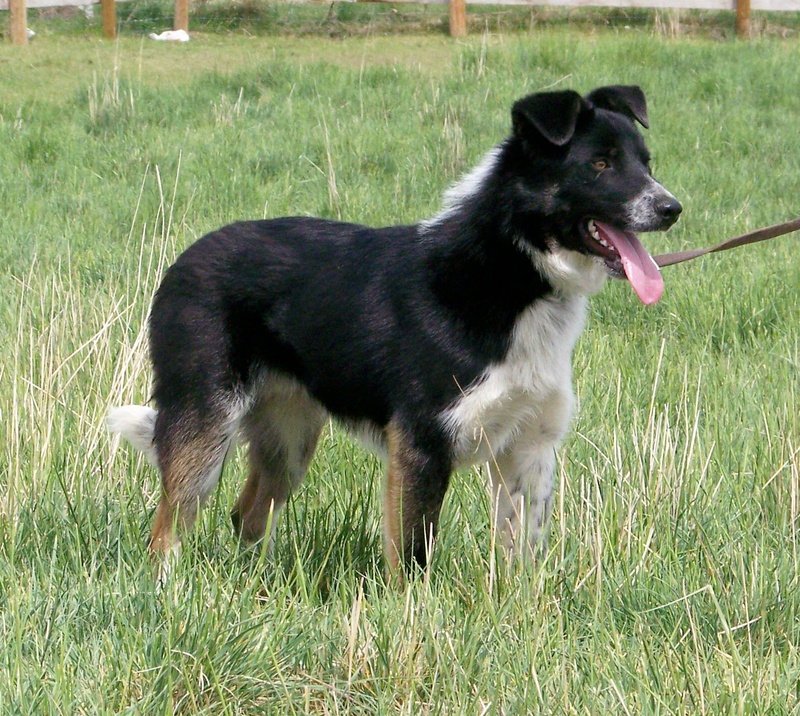
I don’t have pictures of either of these dogs handy, which is a pity, as they were quite different in appearance and breeding, but I had this bright idea of searching Google Images for dogs that looked like them so you could get an idea. Oddly enough, I found not one picture that you might say bore much resemblance to Ted, but quite a few that looked a bit like Spike. This one for example:

Spike [lookalike]

The caption for this picture was:

Clever, independent, energetic and hardy, these are all traits essential to a driver of headstrong cattle. This dog was bred to be active and tireless, and must have a job to do. Given challenging mental and hard physical exercise daily, it is extremely responsive and obedient of dogs.

Now here’s a very strange thing. That description is everything Spike was NOT, even though the picture is a tolerable likeness, but those words would have fitted Ted to a T. Spike we always regarded as a cross between a cattle and a sheep dog, with no idea which he was supposed to be. A mongrel, in other words, and useless most of the time. Ted looked more like he had some border collie in him than any of the hundreds of images I saw in Google, but he was just brilliant as a working cattledog. The best. He looked a bit like this but leaner and smaller:

Ted [lookalike]


Now I’m starting to think the truth is that Ted was in fact the mongrel, great at his task, while Spike was the purebred, but sadly bereft of real cattledog talent or instincts. As you can see, I’m far from being an expert in cattledog breeds – I just make pronouncements on such matters based on instinct, prejudice and irrationality – the way most people do. [There – I’ve just done it again….]

Honestly, I don’t know why we ever got Spike, but maybe it was because Ted was halfway through his working life and Dad figured he could do with some help. Ted did what he could to help train Spike, but he turned out to be a slow learner as far as cattle were concerned. For example, Ted knew that when he nipped a cow’s back fetlock joint to get the cow to move, he had to duck down low straight away so a retaliatory kick from the cow would pass harmlessly over his head.

Spike quickly picked up the nipping bit but failed to understand the importance of ducking down. He would bite, then stop with his head up, eyes half shut, waiting for a kick in the teeth, and that happened more often than not. As a result he got kicked so often that he decided to down tools altogether and resign from active duty. Life in the front line was not for him. Or anywhere behind a cow.

Ted really didn’t care about this, as he was far better rounding up the cows without Spike’s assistance than with him getting in the way. Spike just went and snoozed and Dad was too busy to razz him up, so he got away with it.

Then, things changed. Spike was a good deal younger than Ted, but started to get much bigger and stronger. Their breeding was different, as I said, and Ted was slighter of build and not so muscled up. More serious for Ted, Spike got bored. Ted was of course favoured by Dad because he was the only dog doing any work, so Spike got jealous as well. One day he decided that Ted had been kingpin long enough, and there was an almighty fight between them that Spike won convincingly. He was new top dog. And still as useless as a hip pocket in a singlet.

Having reached the pinnacle of dogdom, Spike set about cementing his position. Spike may have been mixed up psychologically, but he wasn’t stupid. He invented a new game that Ted had to play, or face the certainty of a beating. Spike would find a good sized piece of timber about a metre long and as thick as a baseball bat, and would pick it up and sling it across his forequarters, balanced on his shoulders with commendable skill. Ted would be required to attempt to wrest it away, poor old sod. He’d get back home after a hard day at the office rounding up cows, to find Spike waiting for him with the heavy stick across his shoulders. There was no way he could refuse to play, and Spike kept him at it for ages, twisting and turning and nipping Ted if he actually got in close enough to grab the stick.

If Spike hadn’t found a good sized piece of timber for this purpose – and he never used the same one twice – he would go looking for a nice shaped fortnight-old dry cowpat, pull it up and hold it like a Frisbee in his mouth. Given that there were sixty cows producing such cowpats at the rate of about ten a day, there was never any shortage of nicely baked cow dung for the purpose. So poor Ted had to try to get the cowpat from Spike, a game he enjoyed with as much relish as the one with the stick. It must have driven him nearly mental having to do this, and if anyone human interfered, Spike just beat Ted up, waited till they went away and the game resumed, only for twice as long.

Frankly, the best thing that Dad could have done at that stage was to take Spike round the back of the shed and shoot him, but one day, Spike mysteriously disappeared. This was very odd, as Spike wasn’t the straying type, and someone would have had to have come into our place to take him, which, if they could ever have seen him in action, would have been in lala land to do. Nor would Spike willingly go with anyone, I wouldn’t have thought, as he was on to way too much of a good thing chez nous. But he did look like a good type of blue cattledog, pedigreed even. Maybe some idiot who'd blundered all the way in to our house on the property took him on a whim. Who knows?

I even suspected that Dad had taken the Final Solution option for Spike, just as he would have for any other beastie on the property that wasn’t pulling its weight. That’s what happens on farms. If an animal exists there, it’s for a reason. If it fails to make the grade, it’s usually for the chop, one way or the other. But for some reason, Dad had a bit of a soft spot for Spike. I have no idea why.

Ted’s life suddenly became peaceful, and it must have been a huge relief for him not to have to play the stick or the cowpat game. Ted followed faithfully on the heels of Dad, wherever on the farm he went, whether on horseback or on foot. When Dad walked along the cow trails rather than riding, Ted would be just half a step behind whichever of Dad’s legs was rearmost, if you get the picture. On a warm sunny morning, he would amble along at a pace perfectly suited to Dad’s, the rhythm almost hypnotic for Ted. 

Dad had a wicked sense of humour, and when he noticed Ted in this half-dozing state just moseying along a few inches behind him, Dad would suddenly stop dead, just as if he were in a movie and they’d freeze-framed him, but not everything else in the scene. Especially poor old Ted.

Blissfully unaware what was coming, Ted would cannon into dad’s ‘back’ leg, and if you don’t think a dog’s face can show embarrassment, then you have never seen Ted’s face when he did that. Dad would turn round and stare at him as if appalled by Ted’s indiscretion. ‘O lord and master, forgive your humble servant for doing such a terrible thing as imposing upon your person in this impertinent and unmindful manner’ said Ted’s face, though I’m not sure he would have used those words. More likely, ‘Oh bloody hell! What have I done?’ I swear he would have been blushing furiously if his head wasn’t covered in black and blue fur. 

Then dad would laugh at him and you could see that Ted finally realised he'd been had, because, just as his face could show embarrassment, he could also grin when the penny dropped, and take the joke like a man. Well, dog. I know this because I was walking 10 yards behind them once when Dad did this to him, and it was the funniest thing I'd seen since a chook got bogged in Mum's failed bread-making dough that she'd buried in the garden - but that's another story. Thereafter if Dad tried to catch Ted out in the same way for weeks afterward, he never could, but the time inevitably came when, in a moment of doggy torpor, Dad got him again.

But it was all not to last. One morning, just as milking was finished, who should come limping footsore and weary up to the dairy but Spike. It must have been eight or ten weeks since he had disappeared. Dad called him by name and Spike actually leapt into his arms. Spike was so pleased to be home that when Ted rounded up the cattle after milking, Spike actually helped him drive them down the hill and out to the paddock, good as gold. It was like a miracle.

Sadly, it wasn’t. After Spike was reassured that he was home and had recovered from whatever long journey he’d undertaken to get back, he resumed his slothful ways and forced Ted back into the stick or cowpat game. He was more jumpy – nervous – as well. One day I pointed my capgun at him from about three metres back and pressed the trigger. There was a cap in the gun and it cracked like a pistol. Spike flew for me, had my hand in his jaws in a flash and I dropped the capgun mighty quickly. I had teethmarks on my hand and wrist but I didn’t say anything about it to anyone because I didn’t blame Spike. Someone had obviously taken at least one potshot at him with a rifle in his travels.

I did get my revenge for the bite occasionally, later on, by looking very serious and pointing my finger at him, which would always make him crouch down and snarl viciously at me for as long as I kept the finger pointed towards him. I made sure I wasn’t too close to him though, and certainly didn’t make any pistol-cracking noises.

After returning, he was also terrified of thunder and would be a quivering mess as a storm approached, and sneak up under my bed on the verandah. He’d shake and whimper till the storm was over, and then crawl out and slink away with a somewhat sheepish look on his face. I think it was related to the sound of rifles and he must have had some sort of close call with one.

My theory was that he was somehow stolen by somebody who thought he might have been pedigreed, had tried to work him or kept him locked up and mistreated him, and maybe even had then tried to shoot him, but Spike got away. There was never any evidence that he’d been hit by a bullet, unless it was maybe ratshot or shotgun pellets from a long way away and they hadn’t penetrated his skin. I don’t know. Just another of my wild guesses – take it or leave it. That will be a mystery that will never be solved.

Ted and Spike lived on in a state of Cold War, though with occasional flarings up, until I went to Teacher’s College. I know Ted passed on in my first year in Brisbane, but with the sale of the farm when I was away from home, I never saw Spike again and I don’t know his fate. Maybe a bigger dog with a cowpat in his jaws forced Spike into eternal games of Try Taking This. It would have been poetic justice, I guess, though I wouldn’t have wished it on him.


[Back to Index]

Wednesday, November 3, 2010

Some encouraging news - thanks, Avastin

...and thanks to those who made it possible!


Tracey and I have just returned from an MRI scan in Tamworth. We have had a look at the scans and we feel happy with what we are seeing. Let us share a comparison with you.


Here is a scan that was taken just before the first dose of Avastin, when things were getting very bad in terms of seizures and serious loss of mobility.


View looking down on skull, eyes at the bottom of the picture [August 2010]

What you see in the white area, [the black hole in the middle looking like an egg yolk] is a sac of dead tissue, probably the effect of blasting the tumour with radiotherapy. This isn't bad - it's what should happen. The doughnut shaped grey ring round and close to the black necrotic sac is the tumour [inside the white area], which had spread quite a bit in spite of chemotherapy and the radiotherapy in Melbourne.

The really white area spreading away from the tumour is inflammation, which creates the same problem as if it were tumour, especially in terms of brain pressure and trigger for seizures. Please understand that this image is only one slice of the brain and does not show the vertical extent of the inflammation.

Now, look at this image, taken today.


The size of the necrotic sac remains the same, which we expected as there's no way current treatment will alter that. But the tumour itself and the inflammation are very much reduced. This certainly explains the pause in seizure activity practically from the day of the first dose of Avastin to the present.


Again, this is not a cure and is not going to make the tumour go away. We also realise that the current efficacy of the Avastin will not last indefinitely. However, it is doing what we had hoped it would - giving me time that I would otherwise not have had, and making a significant improvement to our day-to-day lives. 


I will, of course, do all in my power to boost its effectiveness with natural anti-angiogenesis foods, and while there is no seizure activity, do as much rewiring as possible of other parts of my brain through physiotherapy to restore movement and co-ordination in my right hand, arm and leg.


Such results can only encourage us to fight on with everything we have!

Managing risk of infection

Greeting my sister

Several years ago, my youngest sister was being treated for cancer at a time when I had next to no knowledge of important practical things to do regarding contact with a person whose resistance was at its lowest. I went to visit her in hospital and was slightly taken aback when her husband intercepted me before I could hug her. He asked me to use the ‘dry’ disinfectant provided in the room to sterilise my hands before doing anything else.

What surprised me was not the gentle request by my brother-in-law, which I understood immediately, but the fact that it had never occurred to me without being prompted. In my eagerness to greet my sister, I had so easily disregarded something absolutely fundamental for someone in her condition.

Healthy humans and hygiene

Let’s face it, human beings are not by nature very hygienic creatures. Nor, let me hasten to add, should they be, under normal circumstances. I’m pretty sure that most of the micro-organisms that we share are passed on by bodily contact or exchange of bodily fluids. We touch, hug, kiss, shake hands, pass each other items that have been handled by strangers, share computer keyboards and ATM buttons, we fondle animals, wipe our noses and other portions of our anatomy, open and close doors recently touched by strangers, or pick up goods, coins in an airport or shop without giving a thought to the state of health of the last person to touch the item.

As I said, under normal circumstances, I don’t think this matters a great deal. All life forms do somewhat the same thing in matters of hygiene, and if anything, it probably does more good than harm for the survival of humanity to share bugs around and condition everyone to them. Humans seem to be thriving on it, going by world population statistics, in spite of some rather grotesque departures in hygiene from what many conventional folk might regard as acceptable. Usually, I’m all for a pragmatic approach. Over-concern for hygiene is generally counter-productive and if you could see what organisms you shared by daily contact with people and were too worried by it, you would probably die of stress before the bugs got you!

Sick people and hygiene

But, when it comes to people whose resistance to infection is down, the story changes  dramatically. Cancer patients have been bombarded with drugs designed to lower the immune system so that beneficial effects of some treatments can occur. This is where we have to change our attitude completely.

Hospitals

Hospital procedures are very interesting when it comes to these matters. It’s hardly surprising that hospital staff are totally with it when it comes to contact with patients and risk of infection. They know how important it is for you. But from their point of view, they don't want you passing anything on to them either! It is possible, for example, to enter a hospital as an outpatient, be treated, and leave the hospital without direct physical contact with another human being, and that’s the way it should be.

Minimising contact

If you are being treated for cancer and you know your resistance is down because of the treatment you are receiving, you need to be very aware of how to minimise direct contact with any other person. In your own household, it’s maybe a different matter, but you have more control there over who you touch, when, and how to minimise risk from that contact.

Public contact and places

But in a public place, be very conscious of who and what you are touching. Make sure you sterilise your hands after being in a place where you can’t avoid physical contact. Keep a careful personal hygiene routine. Every risk minimised helps you. Diseases that are usually of minor significance for a healthy person may be deadly for you or me. Even a bad cold or flu for a normally healthy person is no big deal – they might be in bed for a week and feel terrible, but in most cases it’s not life threatening. For a cancer patient undergoing treatment, it can quickly lead to pneumonia and put you in mortal danger.

Beneficial effects

I have been fortunate in this respect since I started treatment for cancer. In fact, so far I have had no flu, no infections and surprisingly, fewer allergies than ever before [touch wood!] I feel sure that this is partly due to careful hygiene management while my body is wide open to invasion and attack from micro-organisms of one sort or another, thanks to my own awareness of it, and especially to Tracey’s untiring determination to keep the household as free of opportunistic sources of infection as possible. That sometimes involves barring the doorway to sniffling friends!

It’s very much in your interests as a person being treated for cancer that you manage contact with everyone else carefully. Not doing so could have severe consequences for you. Don’t be afraid of offending someone by refusing bodily contact if you’re having cancer treatment. It’s your life that’s at risk, not theirs. You may need to make it clear to them to respect that – most people do so immediately. 

When I visited my sister in hospital that first time, I certainly didn’t think about it properly at all. But then at that time, cancer was something that other people might suffer from, not me.


Tuesday, November 2, 2010

The Saturday Night Dance [Final Part]

[continued from Part 2]

Much more rational than the curious behaviour of women was the men’s desire to witness a good fight. 

   Now let me explain something crucial here. This isn’t the sort of brawling you see on TV these days. Fights in the country on a Saturday night as an occasional diversion from the dance itself had as strict a set of rules as the Marquis of Queensberry could ever have devised, and not all that much different in essence. 

   For one thing, the local policeman would keep out of the way, though just close enough to break things up if they should somehow get out of hand – which never happened as far as I ever saw. 

   The men made a human ring around the two fighters. This was something of a disadvantage for either or both participants who might have wished to change their minds at the last moment and escape, because they couldn’t, really. That's something like sati worked in India before 1857, but let’s not complicate things by bringing that dreadful ritual into the discussion.

   As well, there was no dirty or low punching and no attacking the other bloke when he was down. No kicking or gouging or anything like that. The male audience was all ages; often, as in the case of the Jensons, with their father in the front row of the ring as it were, and he would no more have tolerated his own sons doing that as any of the townies. 

   Of course you might expect townies to be more likely to try on some illegal stuff, as they were less likely know any better, being less honourable than country boys because of the latent corruption endemic in urban life. But they’d only have done it once where we came from before they learned not to. There’s considerable loss of face in having your fight stopped by ten righteously indignant middle aged farmers on account of something you shouldn’t have done, shoved bodily in your FJ Holden with twin overhead foxtails and being told to piss back off to town and never come back. No twenty year old of any size, shape or fighting prowess would have dared try to resist that offer. I saw that happen only once. A flock of fearless farmers is a formidable force [as many a politician has discovered].

   The fight would go on until one or other had had enough, maybe with a heavily bleeding or broken nose, or a closing eye, badly cut brow or tongue, sheer exhaustion, or the realisation that what seemed a great idea on the way out to Calliope from Gladstone wasn’t so appealing after all at the moment of truth. 

   If the fighter showed no real heart to continue the battle, that was it. The fight would be stopped simply by virtue of the body language of the obvious loser. There would be no formal declaration of a winner as none would be required. Five minutes or so can be a very long time when someone muscular is trying to hurt you as much as they possibly can with their fists in as short a time as possible, but the Jenson boys had excellent stamina and I don’t remember any townie actually being declared to have won a bout against one of them. Not that there would have been any home turf advantage, of course. And it must be admitted, some of those town boys could fight, or they wouldn't have come out to the dance in the first place.

   After the fight, when the adrenalin and testosterone had settled down a bit, the dance would resume. No-one would be much the worse for wear, even the fighters, though you couldn’t say the same for their clothing, often a bit blood-stained and badly dishevelled, for which their mothers would have given them the rounds of the kitchen when they got home. Maybe the Jenson boys would have escaped it as Mrs Normie Jenson was secretly proud of the fisticuffery of her sons and was a bit pugnacious herself. I wouldn’t have wanted to take her on if she was in one of those moods, I can tell you, and she wasn’t very big. Well, not very tall, let’s say. She was fundamentally barrell-shaped. Oh, and if you wish to question the etymology of the noun ‘fisticuffery’, I suggest you read H G Wells’s A History of Mr Polly, and keep your doubts to yourself, thank you!

   There's one other point I’d like to make here, if you’ll just hang on a sec and wade through the next couple of paragraphs. I’ll keep it brief, I promise. In the 60s as a callow youth, I loved boxing, although from an audience point of view rather than as a participant. You may have guessed that. It appealed to base, primal and tribal instincts in every male, I am sure. So it's not our fault, you see; we have evolved to be like that. 

   The ‘boom-boom, boom-boom’ of the Aboriginal boxers drumming up business with a big base drum for the Jimmy Sharman Boxing Troupe at the Gladstone show every year synchronised with my heartbeat and poured adrenalin into my system, though I now know it was cruel on many young Aboriginal kids who may have come in as one of his boys to fight the locals for little more than their tucker and a place to sleep. 

   To be fair, it was said that Jimmy Sharman [Senior] looked after them, and a place in his troupe did give some of them the chance to go on to bigger and better things in boxing.... maybe.

Jimmy Sharman's Boxing Troupe [Photo courtesy Aust Film Lib.]


Australian boxers like Lionel Rose and Johnny Famechon, who won world professional titles over fifteen rounds, I greatly admired. Cassius Clay, before [and after] becoming Muhammad Ali was to my mind the greatest of them all. When you saw him as an amateur boxer and a light heavyweight gold medallist at the Rome Olympics in 1960, I doubt if you’d ever see a more impressive specimen of physical perfection. 

   But I have long since grown to hate the sport, mainly because of what it did to many boxers later in life, such as Muhammad Ali as a professional fighter. To see him with Parkinson’s Disease, which I am sure was caused by having his brain jarred constantly by massive blows to the head, fighting men as tough and courageous as he - men like the brilliant Joe Frazier - in 40+ degree C temperatures under fierce lights - that's taken much of the pleasure out of the sport for me.

   Back to the Calliope dances - briefly, as I’ve said enough. You can see from all this that without those dances, the township would have had no heart and soul and no fire in its belly. 

   A Progressive Barn Dance illustrates this perfectly. It made every male in the hall dance with every female, people of all ages, shapes and sizes, and dancing ability, all done with good grace on all sides. Ladies put up with some pretty ordinary dancers amongst the men, though most got around the dance floor reasonably well I suspect. And the less graceful included both the Tucker girls from Builyan, who in their entire lives were untouched by notions of body rhythm and timing on the dance floor. In the Progressive Barn Dance as the change of partners took place, to make contact with them sufficiently to place one hand on their waist and hold the other in yours was like grappling with a wrestler, Graeco-Roman style, who apparently had no intention of letting you near him – yet that was all they wanted. It just didn’t work out that way as you approached them. So in the end you just dived in with a grapple tackle, and hoped for the best.

   Oho, you think I am exaggerating, don’t you? Well, I just wish you had tried to get them into a waltz position before the waltz bit of the Barn Dance was over, that’s all. Then you’d know. But what did it matter? They got married in the end and had a tribe of kids each [so someone must have got the timing right! - or was the grapple tackle principle invoked in lovemaking as for dancing?].... and the world kept turning.

   Nothing could have built a sense of community and belonging more than this collective clannish experience. The Saturday Night Dance defined the relationship of each individual with every other in the township, with each kinship group and caste, and even with comparative strangers.

From a personal point of view, we enjoyed it even more when Dad had been over at the pub and had a little more than the usual couple of Fourex – or maybe he had one or two rums with beer chasers to vary the drinks. This didn’t happen very often, but if so, he would come over from the pub at ten in that state that I described before as ‘merry’, which meant he had just enough grog in him to be happy and want to dance, but not too much as to make him unable to or unsociable. 

   10 pm was an excellent time for us kids to ask him for a shilling to buy a pie at the café next to the dance hall; something we usually would be too afraid to do. He never refused when he was merry so we knew we were on a good thing. Still, it was always good strategy to be the first to ask him, because the shillings got a bit harder to come by the further down the food chain you were.

   On the nights we would walk home from the dance, before we had the car, he would be funny and happy in this relaxed state of inebriation, waking sleepy but offended cows as we walked through the paddocks and setting off foxes barking in the distance. Have you ever heard a fox ‘bark’? It’s a chilling sound at close range, but it didn’t bother us when we were walking home from the dance and Dad would mimic them. The noise is quite like the sound a fox terrier would make if you kicked it in the guts in mid-bark. Try it sometime and you'll see I'm right.

   Mum would make Dad a cup of tea when we got home and he would fall asleep within moments of his head hitting the pillow, as 1 am was late for someone who had to be up by 4.30 am and on any other night was usually asleep by 9.30 pm at the latest. 

   However, he would be well awake before milking time the following morning, as the rum and beer would have done the more sinister side of their work by 3 am. From my bed on the verandah, I would hear the unmistakable sounds of all the night’s fun coming back to haunt him, with Dad down under the mango tree getting it all off his chest, as it were. Throwing up, hurling, chundering, calling for Ralph, a technicolor yawn, chucking; call it what you will, it all amounted to the same thing. The party was over for that night at least, and milking the cows that Sunday morning was always bound to be a bit of a tetchy affair.

.
dance1 | dance2 | dance3

Monday, November 1, 2010

The Saturday Night Dance [Part 2]


About 9.40 pm, there would be interval, and there was no accident about the timing. This was when the musicians could go over and have a couple of beers and a smoke at the pub before it closed at 10 pm. The closing time for the bar was set in stone and would have been rigorously policed if necessary, but it wasn’t necessary because that was the way it had always happened, world without end amen.

So, 10 pm was a watershed moment for the Dance. It’s vital to understand that the age of maturity was then 21, not 18 as it is now, so anyone under 21 wasn’t in the pub at all the whole night; hence the reason for the unattached nature and age bracket of the dancers in the dance hall before 10 pm. I’m not saying there wasn’t some sly grog in cars, but anyone under 21 didn’t drink openly, as far as I knew. They could end up in the lockup if they did, as this law was policed by the State Liquor Licencing Board, and they could have spot inspections anywhere in the state, so the town copper himself could be in trouble if he didn't police it properly. The publican of course could lose his liquor license or face heavy fines, so underage drinkers weren't popular with either of them.

At 10 pm, all Gents or couples who weren’t already in the Hall would come over the road from the Diggers Arms pub and spill into the dance area, women in the canvas chairs and men standing round the entrance, on the dance floor itself. Having had a couple of hours to get a few beers into them, the married men would be cheery and a bit boozy, and the Orchestra would also have been enlivened by as many drinks as they could fit in over in the lounge at the pub at Interval, so the music went up a notch as well.

On hot summer nights, the men would be sweaty and merry, especially if they were wearing the new pure rayon shirts that were all the rage amongst the young Gents. The synthetic fabric, not much different from plastic, did not allow the skin to breathe like the old white cotton shirts, and the results could be a bit of a disaster in the livelier dances, with soaked shirts and man-sweat pouring off them in a stream and spraying everywhere. 


Even more alarming from the Ladies’ point of view, farmers’ hands had been engaged for the day in activities involving earth, animals and tractor grease, and most Ladies had early in their career as Ladies learned the dangers of choosing light coloured regalia for the evening. It wasn’t that the farm boys were dirty, just that most of that stuff takes a lot of time and effort to get off, and time was often short, bathrooms were dark, and the effort a bit too much to get some of the dirt and grease out of the cracks and fingernails, even with sandsoap.

By the end of the evening, a Lady who had succumbed to the temptation of choosing a fashionable pale colour over common sense would have a nice blackish mark from shoulderblade to hip by the end of the night. Maybe it could be viewed as some sort of status symbol, but if so there was no real indication it was. If she were particularly attractive, this mark might extend well down her rump, for the farm boys were not averse to a bit of a fondle as far down from the waist as they dared, especially if they’d had one beer too many and Dutch courage had entered the equation. Not that the Lady always had much choice in that, as the deed could be done before the touch registered on the hind quarter Richter Scale.

Now don’t get all huffy about this if you have a mind to; I never saw a country girl at a dance who couldn’t deal with unwanted attention very smartly. Not that she wouldn’t have had plenty of backup if needed – her mother, some aunts and cousins, or as a last resort, a brother or two would have a little talk with the offender if he had recidivist tendencies. And believe me, you probably wouldn’t want the last option if you were that bloke, particularly if the brother was more sober than you and resolute in his determination to defend the family honour - as he was bound to be. A protective brother used to throwing ten gallon milk cans around can be pretty persuasive.

Which brings me to that other institution worthy of describing. The Saturday night dance may sort out love and marriage, but on occasions it also settled matters involving youth and testosterone in another way. On some nights you could feel a different electricity in the air at a dance; or maybe this was just a boy thing.

It was usually precipitated by a few city slickers in their late teens or early 20s who had driven from Gladstone out to the dance, either to check out the girls in the hall or to engineer a fight with some of the local lads, whichever came first or looked more fun. Sometimes they wouldn’t even pay for a ticket and would stand outside the entrance door and ogle the girls inside from that vantage point – often with derogatory or suggestive comments that were intended to be heard by prospective suitors or brothers of the girls, if they were more intent on fighting than romance. One way or another, it was a clear challenge to the local swains.

The atmosphere would brew for some time. Let’s be honest about this – sometimes the farm boys welcomed the opportunity to have a go at these townies and were quite keen on a good fight – the impetus for it was rarely entirely one-sided. Not me – I stayed right out of the business end of these barneys. I’d heard the crunching sound of fist on flesh or bone many times from close enough range to know it wasn’t my thing as a direct participant. The Jenson boys weren’t backward in coming forward for a stoush, and a townie better know what he was taking on, because there were three of them and he might have to tackle them one at a time in no particular order if circumstances warranted. West Side Story, Romeo and Juliet all over again…. without the daggers or flick knives.

At some stage a fight would become as inevitable as another breaking of parole conditions by Lindsay Lohan. You would know this because the likely participants would disappear to a designated spot at the far side of the Diggers Arms pub, together with some of their seconds, thirds and fourths, sort of like a duel at dawn, only it was 10.30 pm on a Saturday night. Then came the moment we teenage boys in the dance hall were waiting for… that magic moment when the word ‘F-I-I-I-G-H-T!!! would be shouted in the door, and the dance hall would be totally emptied of males at great speed, except for some poor kid whose mother had anticipated the event and had collared him. 


The Ladies would resign themselves to a male-free agenda for the duration of the fight, while the Orchestra played a few numbers without any heart in their music. Sometimes the Ladies would dance with each other.  Strange, but there you go….


Needless to say, they were banned from this Absolutely Men's Business. Sad for them, I know, as I'm sure they would have been fascinated by the spectacle of their brothers, cousins or boyfriends slugging it out with a townie, but there are just some things that had special mystique we blokes needed to preserve. That mystique would have been shattered by the loud wailing of a girlfriend when first blood was drawn, or her pulling a loose paling off old Ma Stockbridge's fence to bring the matter to a premature and dishonourable conclusion.


.
dance1 | dance2 | dance3

The Saturday Night Dance [Part 1]

By far the most important social institution in Calliope was the Diggers Arms Hall, directly across the road from the Diggers Arms Hotel. I want to tell you of its pivotal social function in our fair village, just as the dance hall has been in the past for rural areas all over Australia. Sadly no more, I fear, the B & S Balls now the last vestige of the local dance, having become a mockery and corruption of that once venerable ritual. But if you get an inkling of what the Saturday night dance meant to Calliope, then you start to understand the people in it, their relationship to each other, my family and me. So here we go.

The Diggers Arms Hall at Calliope had a dance floor, a stage, a ticket office and a side verandah where food could be served. At the end of an alleyway on each side of the hall were the toilets, accessed by the men down the left and darkest side, and by the ladies on the broader and better lit right side. I think there was also some sort of light in the Ladies’, but mostly the men just took the pressure off their bladders by going down a bit further into open ground beyond the Men’s. The grass was definitely always greener on the other side, thanks to the watering and generous nutrients it received weekly.

Dances were every Saturday night in normal times, sponsored by various community groups in rotation – mostly Church Ladies’ Guilds. At times of severe drought, there wasn’t always enough money about to hold dances, but circumstances had to be dire for that to happen over a sustained period. Mostly they went on without fail. Mitchell’s Orchesta just about always played for these dances in Calliope. Shirley Mitchell played piano, Theos Mitchell was on drums, and Basil Heeney played clarinet or saxophone. This we knew to be a Very Good Orchestra, though it was the only band many of us younger ones had ever known, so there was no real point of comparison. No-one had ever said otherwise – and in fact, it was perfect for our needs. TV hadn’t quite made it to Calliope by then, so we didn’t know about shows like Bandstand,  Countdown or Rage, or even the Black and White Minstrel Show. Those would come – but not just yet.

The music was a mixture of 30s, 40s and a fair smattering of 50s songs; we knew them all, and the order of the dances. The Opening Waltz began proceedings about 8 pm, followed by a Gypsy Tap to liven things up, and a Foxtrot or a Barn Dance. Ladies would sit round the dance floor in canvas chairs and the men and boys stood in a clump down the entrance door end of the Hall. This ensured that no Gent missed the entry of any Lady to the Diggers Arms Hall. When the MC announced a dance, the Gents would fan out from their cohort at the end of the hall and ask a Lady to dance. Such requests were rarely if ever refused, because [a] the Gent well knew which Lady to ask or not to and [b] at that stage of the night at least, it was bad form for the Lady to refuse. Just not done.

Right before or during the Opening Waltz, Pops Ballroom Dressing was sprinkled over the floor of the dance area – a mixture of wax impregnated sawdust, I would say, which made the floor slippery – essential for waltzing in our leather soled shoes. Most riding boots were leather soled and some of us even had leather soled dancing pumps. If the floor was still ‘too sticky’ then another carton of Pops was demanded until the surface was good and slippery – not quite like ice, but not that far off it either. It was a point of honour that a Gent never allowed his partner to slip over, though couples would occasionally come down together, occasioning much laughing and jeering and lewd suggestion.

Dance brackets were about fifteen minutes long, depending on the amount of enthusiasm shown for the style. Not enough enthusiasm might shorten them; an executive decision taken by the Orchestra, which, after years of playing there, was pretty much a law unto itself really. Much enthusiasm by the dancers or a refusal to sit down when the final bracket was over might result in another bracket of songs if the Orchestra yielded to popular demand. In the breaks between dances – usually about 10 minutes – boys were allowed to slide from one end of the hall to the other – usually by taking a short run in leather soled shoes or sandals, and then ‘surfing’ the floor as far as momentum would take them. As kids we got really skilful at this and it did wonders for our balance when dancing on the slippery floor years later on with a partner on our arm. Today’s sneakers would be death to this activity. You cannot slide in rubber soled shoes. Nor can you dance.

Even a casual observer would have noticed one thing that you would never see these days, apart from the fact that the only place you might ever see such dancing now would be at some sort of bush dance. That was the fact that early in the night, most of the Gents at the end of the Hall were young and unattached. There was a good reason for this and the dynamics of the dance changed suddenly at a particular point in the night. I’ll come to that in a minute but I’ll give you a clue – think 10 pm. Or if you are a Victorian who can remember back far enough, think Six O’clock Swill.

Things were fairly predictable and slightly formal for an hour or so, but a Tap Gypsy Tap livened things up. This was near identical to but differed from a Gypsy Tap in one vital respect. All the Gents who wanted a dance but hadn’t asked a Lady to do so grouped in the centre of the dance floor for this dance, and it was their right to tap on the shoulder any Gent dancing with a Lady, and that Gent had to relinquish her to the interloper, go to the centre with the other unattached Gents, and tap the shoulder of another dancing Gent [or the same one who had taken his Lady] and dance with that partner. There were unwritten rules about tapping that weren’t entirely unbreakable depending on the relative sizes of the tapper and the tappee.

Usually a Gent would be allowed one circuit at least before the original tappee could tap him back and resume dancing with his former partner, but it was open slather on Gents dancing with Ladies who hadn’t been tapped by that particular Gent before. Thus a Lady might have a score of partners during just one bracket if she were Miss Popularity. A Gent who had chosen a not so popular Lady to start the dance might find himself stuck with her the entire Tap Gypsy Tap, which may or may not have suited one or both of them depending on how they felt about each other. A hasty choice could have you repenting at leisure as you went round the circuit for the hundredth time with someone you weren’t all that keen on, praying for a tapper to relieve you. I daresay the Lady might well have been praying for the same thing - maybe even more than you.

There was a lot of good natured fun in this dance and it was one of the favourites for the Gents and for the more popular Ladies, as partners were rapidly exchanged. For example, if a couple liked each other, they would do their best to evade shoulder tappers by dancing as far away from the centre as they could, or whirling out of range of a pursuer. If the Lady wasn’t that keen on her partner, she would, if skilful enough, ‘accidentally’ manoeuvre their way close enough to the middle to make it easier for someone else to tap her unwanted partner, and hope for the best.

I’ve taken some trouble to describe this dance because it had a vital social function amongst the unattached, or not so firmly attached. It first and foremost established who the most popular Lady was, and the order of popularity of the others. It also gave every unattached male the opportunity to indicate his interest in one or more of the Ladies on the dance floor, while giving them the chance to indicate their level of interest in him, without any real embarrassment to either.

So while each dance had its subtle way of matching couples, there was nothing quite like the Tap Gypsy Tap for the initial sorting out of eligible Ladies and Gents. Later in the night, a slow and slinky Jazz Waltz would settle things in terms of who was really interested in whom, so each dance was of considerable interest to mothers, sisters and to a lesser extent, the men of the families involved. Basically this was regarded more or less as Women’s Business, but make no mistake, it wasn’t just about tripping the light fantastic – this was about settling far more enduring relationships.

About 9.40 pm, Interval would be announced by the MC, and there was no accident about the timing.
.
dance1 | dance2 | dance3